

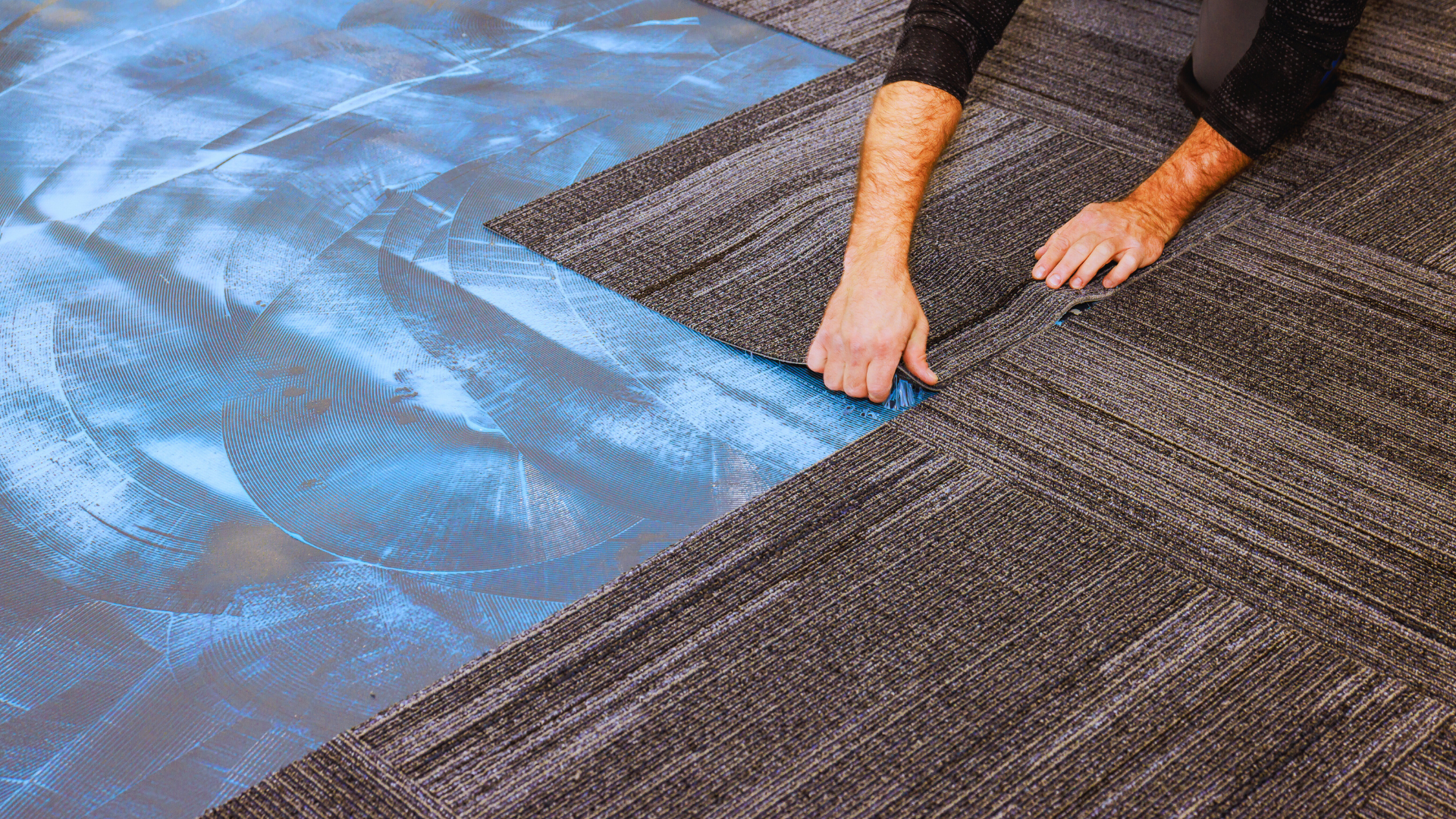
You will learn how to install peel-and-stick tiles so the job looks professional and lasts. Follow clear surface prep, accurate measurements, and careful tile placement to get a smooth, durable result without specialty tools.
They will find practical steps for preparing the subfloor, choosing materials, and avoiding common mistakes that cause lifting or uneven seams. The article breaks the process into manageable actions so anyone can tackle a small floor or backsplash project with confidence.
Preparation for Peel and Stick Tile Installation
This preparation covers selecting the right peel-and-stick tile, gathering the right tools, checking and prepping the floor or wall, and measuring and laying out the pattern. Each step reduces mistakes and ensures the self-adhesive tile bonds correctly.
Choosing the Right Peel and Stick Tiles
They should pick tiles rated for the specific surface and traffic. Vinyl-backed peel-and-stick floor tiles work best for residential floors; thinner wall-specific self-adhesive tiles suit backsplashes. Check the manufacturer’s recommended substrate—some tiles bond only to smooth, non-porous surfaces such as clean concrete, terrazzo, or existing vinyl.
Match thickness and wear layer to expected use: choose a tougher wear layer (12–20 mil) for kitchens and high-traffic areas. Review shade and pattern repeats so seams align visually. Buy 10–15% extra for cuts and waste.
Confirm ambient temperature and acclimation needs before installation; many tiles require 48 hours at room temperature to relax and adhere properly.
Gathering Essential Tools and Materials
Assemble hand tools and consumables before starting to avoid interruptions. Essential items: a sharp utility knife with replacement blades, a long straight edge or aluminum ruler, a quality tape measure, a carpenter’s pencil, and a T-square or layout chalk line.
Include a tile cutter or heavy-duty scissors if using thin vinyl tiles, plus a flash roller (2–3 kg) to press tiles and remove air pockets. Keep a rubbing alcohol or manufacturer-approved cleaner, tack cloths, and levelers or shims for transitions.
Have transition strips, quarter-round, and appropriate adhesive or seam sealer on hand when the tile type or floor junctions require them.
Evaluating and Prepping the Surface
Inspect the substrate for cleanliness, flatness, and dryness. Remove old adhesive, wax, grease, and loose coatings using a scraper and solvent approved for the substrate.
Repair holes, cracks, and uneven spots with a floor patch or skim coat. Use a straight edge to find gaps greater than 1/8 inch over 6 feet; level those with a leveling compound following the manufacturer’s cure times.
Vacuum and wipe the surface with isopropyl alcohol or recommended cleaner. Allow full drying. Relative humidity and substrate moisture can prevent adhesion; test with a moisture meter if concerned.
Measuring and Planning Your Layout
Measure the room accurately and sketch a scaled layout, noting fixed obstacles like cabinets and vents. Determine the center point by snapping perpendicular chalk lines from midpoints of opposite walls. This creates primary layout lines to keep tiles symmetric.
Dry-lay a row along the center lines to check edge cuts and pattern alignment before removing liners. Plan where fractional cut tiles will fall; shift the starting line if end strips would be narrower than half a tile.
Mark tile orientation and sequence with pencil or small masking tape notes to maintain consistent pattern flow during installation.
Step-by-Step Process for Installing Peel-and-Stick Tiles
This section explains the practical sequence for laying peel-and-stick tiles: dry-fit to plan layout, cut tiles to fit edges and obstacles, remove liners and press tiles firmly, then inspect and seal edges. Follow specific measurements, tools, and techniques to avoid gaps, lifts, or uneven seams.
Dry Fitting and Starting Row Placement
They begin by cleaning and measuring the subfloor or wall surface, removing paint flakes, grease, and debris with a degreaser and a vacuum. They measure the room width and length, mark the centerlines with a chalk line, and snap perpendicular lines to identify a true starting point.
They lay out full tiles along the centerlines without removing the backing to check pattern alignment and edge spacing. They stagger seams according to the tile pattern and use a straightedge to ensure rows stay square; adjust the first row until cuts at opposing walls look balanced.
They select a starting row that gives symmetrical cut widths at walls—usually centering on a focal point like a doorway or cabinetry. If tiles have directional patterns, they confirm that arrows or grain directions align consistently across the field.
Cutting and Fitting Tiles
They measure the gap at walls, vents, and fixtures and transfer those dimensions onto the tile face. For straight cuts, they score with a utility knife and snap; for curves or L-shapes, they use a jigsaw, tile nippers, or a fine-toothed jigsaw with a carbide blade.
They wear gloves and eye protection when cutting and keep a scrap tile for test fits. For outlets and pipes, they drill a pilot hole, then cut radial reliefs with snips, checking fit before finishing the adhesive step.
They check tile fit frequently during dry runs and trim as needed rather than overcutting. They label cut pieces and place them where they belong to avoid confusion during installation.
Adhering Tiles Securely
They peel a small corner of the backing and align the tile with chalk lines, making sure the tile faces are square before exposing the full adhesive. They remove the backing fully, lay the tile, and press from the center outward to expel air and prevent bubbles.
They use a 100–150 lb laminate roller, applying 2–3 passes per tile, or a hand roller for small areas to ensure full contact. For edges near wet areas, they apply a compatible thin bead of silicone caulk to seal the perimeter after the tile is set.
They avoid stretching the tile while placing it and maintain consistent seam spacing by using spacer tabs or alignment clips. If any tile lifts, they lift gently, apply additional pressure, and re-roll immediately.
Post-Installation Checks and Finishing Touches
They inspect the entire surface for loose edges, bubbles, or misaligned seams within 30 minutes of rolling and again after 24 hours. They smooth any remaining bubbles by lifting the tile slightly and reapplying pressure or by piercing tiny bubbles with a pin and pressing down to eliminate trapped air.
They trim excess adhesive that squeezed out and clean the surface with a manufacturer-recommended cleaner to remove smudges. They reinstall baseboards or transition strips, fastening into the substrate—not through the tile—so the tile edge remains unsupported and free to expand.
They allow the manufacturer-recommended cure time before heavy traffic or placing large appliances—typically 24–72 hours—and avoid wet-mopping for the initial period if the product instructions advise it.

Leave a Reply